Salt, sand, and humidity never take a day off at Vanderbilt Beach. If you love easy indoor-outdoor living, your finishes work hard every season. You want a home that looks refined and stays that way under coastal stress. This guide shows you the best flooring, countertop, and wall solutions for Naples’ shoreline climate, plus practical installation and care tips that protect your investment. Let’s dive in.
Why resilience matters in Vanderbilt Beach
Life by the Gulf means beautiful views and persistent exposure to salt-laden air. Fine beach sand tracks inside, humidity runs high most of the year, and UV is intense. These conditions can scratch, stain, or warp finishes that are not designed for coastal use.
Local codes and guidance reinforce what works. The Florida Building Code and Collier County permitting address coastal construction and fastener durability. FEMA flood data and NOAA sea-level resources inform elevation and flood-wise design. For indoor comfort, EPA guidance suggests maintaining relative humidity below 60 percent, with a common target of 30 to 50 percent to discourage mold.
The takeaway is simple. Choose materials and details that resist corrosion, tolerate water, handle sand abrasion, and remain UV stable. Then install them with the right adhesives, waterproofing, and fasteners.
Best coastal flooring
Glazed porcelain tile
- Why it works: Impervious, highly scratch and stain resistant, and excellent for sandy traffic. Large-format, rectified tiles deliver a luxury look that mimics stone or wood.
- Key install notes: Use polymer-modified thinset and consider a decoupling membrane. Include movement joints. In wet zones, choose epoxy or polyurethane grout. Use 316 stainless for exposed edge profiles in coastal areas.
- Care: Sweep or vacuum sand often. Use non-porous or sealed grout for easier cleanup.
Natural stone
- When to choose: Granite or other dense stones can deliver a classic, high-end aesthetic with better salt tolerance than many marbles.
- Tradeoffs: Marble, limestone, and travertine are more porous and can etch. Sand can dull polished surfaces.
- Install and care: Use moisture-tolerant mortars and membranes in wet spaces. Seal regularly with products suited for chloride exposure. Avoid acid cleaners.
Luxury vinyl plank (SPC/WPC)
- Why it works: Waterproof cores with realistic wood visuals, warmer underfoot than tile, and strong abrasion performance when you select a commercial-grade wear layer.
- Considerations: Avoid prolonged direct sun on thin-wear products. Use underlayments and adhesives rated for high humidity, or choose floating SPC where appropriate.
- Care: Sweep often and clean with neutral pH products.
Engineered hardwood (water-resistant cores)
- Appeal: True wood warmth with upgraded cores that resist moisture better than traditional hardwood.
- Caution: Still more delicate under sand and salt. Avoid in first-floor flood-prone areas or treat as a sacrificial finish.
- Install and care: Verify manufacturer coastal performance and warranties. Use finishes with UV inhibitors and keep sand at bay.
Polished concrete and terrazzo
- Strengths: Extremely durable for sandy, high-traffic zones. Terrazzo offers striking custom looks.
- Considerations: Hard underfoot. Exterior slabs need attention to salt intrusion and efflorescence.
- Install and care: Use densifiers plus topical sealers rated for salt exposure. Reseal on schedule and wet mop as needed.
Outdoor and lanai surfaces
- Best bets: Textured porcelain pavers are excellent for lanais and pool decks. Choose UV-stable products with proper slip resistance.
- Natural stone vs porcelain: Dense, sealed stone can work, but porcelain usually wins for salt and pool chemical resistance.
- Details that matter: Use 316 stainless hardware, design flush transitions, and plan drainage so sand does not collect.
Top picks: glazed porcelain tile for main living, commercial-wear SPC in entries and bedrooms where you want warmth, and textured porcelain pavers outdoors.
Countertops that last
Engineered quartz (indoors)
- Pros: Non-porous and highly stain resistant with luxury vein patterns. Great for coastal kitchens and baths.
- Limits: Not ideal in continuous direct sun. Prolonged UV can discolor standard quartz.
- Use case: Reserve for indoor counters away from heavy UV exposure. No sealing required.
Porcelain slab countertops
- Pros: Extremely low porosity, UV stable, and highly heat and scratch resistant. Excellent for indoor kitchens, sunrooms, and outdoor kitchens.
- Install notes: Work with fabricators experienced in large-format porcelain. Provide mechanical support at overhangs and use exterior-rated adhesives.
Natural granite
- Pros: Durable with relatively low porosity and strong salt resistance. Delivers a timeless luxury look.
- Care: Seal periodically. Avoid acidic cleaners and verify the specific stone’s maintenance needs.
Concrete countertops
- Pros: Customizable and premium when well fabricated. Can be sealed for salt resistance.
- Considerations: Maintenance and resealing are ongoing. Color can shift under UV.
- Install notes: Use food-safe densifiers and topical sealers rated for salt. Include reinforcement and expansion joints.
Stainless steel
- Pros: Impervious to salt and easy to sanitize. Ideal for outdoor kitchens and heavy-use prep zones.
- Key spec: Choose 316 stainless near salt water to minimize pitting. Expect visible wear that becomes part of the patina.
Solid surface (acrylic)
- Pros: Seamless and repairable with moderate stain resistance.
- Limits: Not highly heat resistant and can discolor in sun. Not the top choice for outdoor or sun-heavy use.
Quick guide: Choose quartz or porcelain indoors depending on your style and maintenance goals. For outdoor kitchens or sun-drenched counters, porcelain slabs or 316 stainless are the reliable choices.
Walls and trim that resist moisture
Interior wet rooms
- Backer boards: Use cement board or glass-mat gypsum in showers, baths, and laundry rooms. Add a liquid-applied waterproofing membrane in wet areas.
- Mold-resistant drywall: Paperless or fiberglass-faced gypsum works well in high-humidity spaces but does not replace waterproofing.
- Coatings: Select 100 percent acrylic interior paint with mildew resistance. In utility areas, consider high-performance or epoxy coatings.
- Trim: PVC or composite trim resists rot and swelling better than wood near lanais and entries. Pair with 316 stainless or hot-dip galvanized fasteners per code.
Exterior wall systems
- Cladding: Fiber cement siding and properly detailed stucco perform well in salt air. PVC trim is low maintenance and rot proof.
- Detailing: Use robust flashing, sill pans, and a continuous drainage plane. Keep cladding off grade and ventilate behind the facade.
- Fasteners and connectors: Prefer 316 stainless in exposed coastal locations and isolate dissimilar metals to avoid galvanic corrosion.
- Exterior coatings: High-quality acrylic paints with mildew resistance work well. Elastomeric coatings can help where movement and hairline cracks occur, if compatible with your wall system.
Installation essentials
Adhesives and grouts
- Use polymer-modified thinsets and adhesives rated for high humidity and exterior use where needed.
- Choose epoxy or polyurethane grout in wet areas and sandy entries. These resist staining, salt penetration, and microbial growth.
- Sealants for joints: 100 percent silicone or specialty polyurethane products with UV and salt resistance.
Fasteners and movement
- Specify 316 stainless for exterior and near-coast hardware. Hot-dip galvanized can work indoors per code. Avoid mixing metals without isolation.
- Include expansion and movement joints for tile and slab installations to handle heat and humidity.
Drainage, thresholds, and lanais
- Design flush, well-drained transitions so sand and water do not collect. Add scuppers and correct slopes at lanais and decks.
HVAC and humidity control
- Target indoor relative humidity in the 30 to 50 percent range and avoid sustained levels above 60 percent. Use properly sized HVAC with dehumidification and good ventilation. Variable-speed systems help avoid short cycling.
Curated finish pairings
- Main living and kitchen floors: Large-format glazed porcelain tile with a decoupling membrane and epoxy or urethane grout.
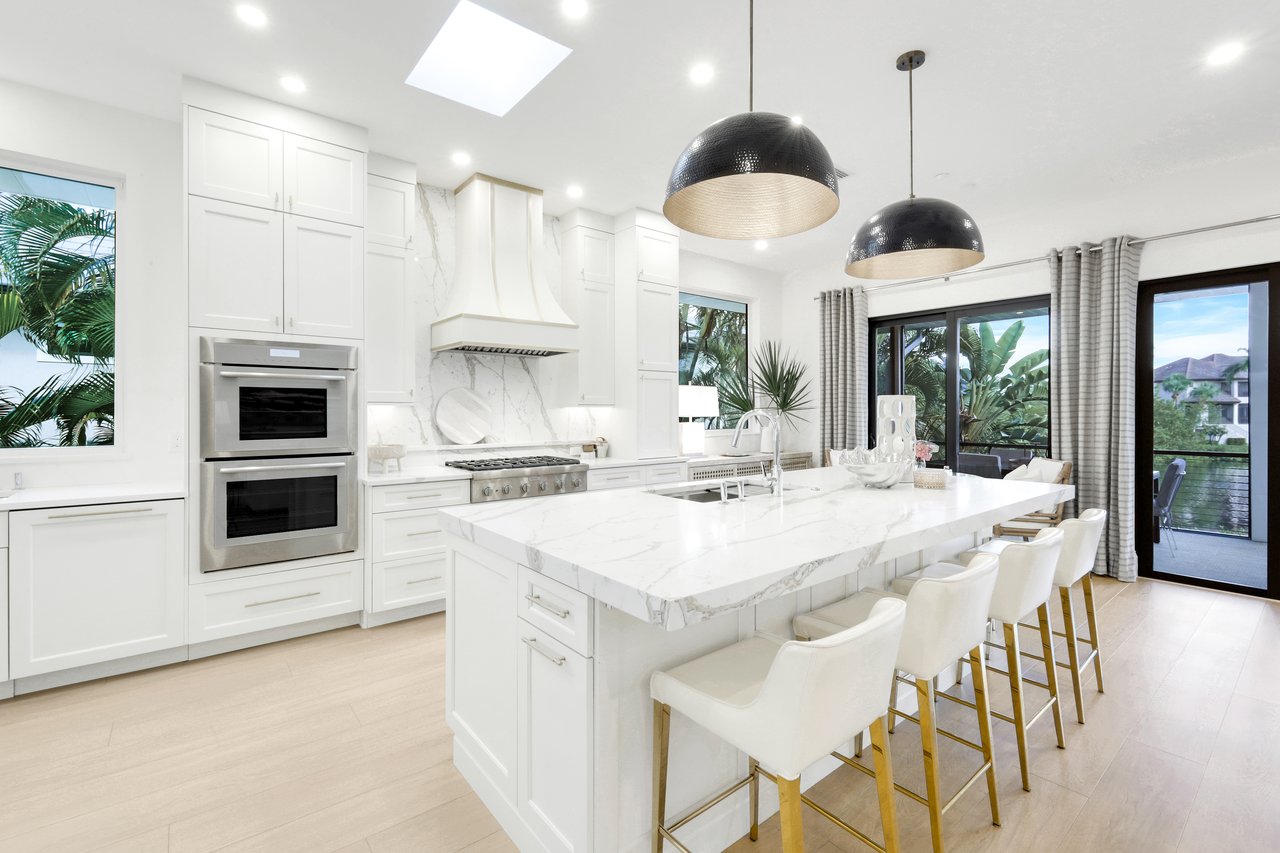
- Indoor kitchen counters: Engineered quartz for low maintenance, or porcelain slab for UV stability in bright spaces.
- Sunroom and outdoor kitchens: Porcelain slab or 316 stainless steel to handle UV, heat, and salt.
- Primary bath floors and showers: Textured porcelain with epoxy grout over cement board plus a liquid waterproofing membrane.
- Pool deck and lanai: Textured porcelain pavers, properly sloped with chemical and slip resistance.
- Entry and mudroom: SPC rigid-core LVP with a heavy commercial wear layer for sand abrasion.
- Bedrooms: SPC for low maintenance, or waterproof-core engineered hardwood for a higher-end wood look.
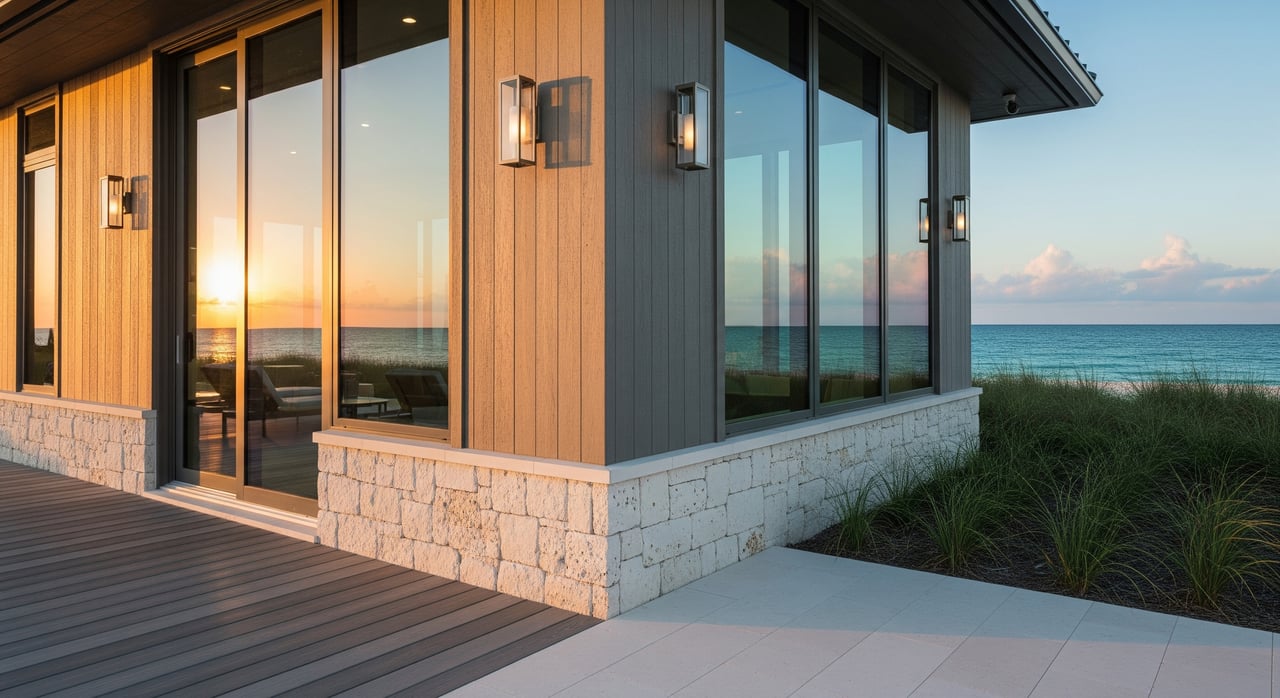
- Exterior cladding and trim: Fiber cement or properly detailed stucco with PVC trim, stainless fasteners, and a continuous drainage plane.
Maintenance checklist
- Daily to weekly: Sweep or vacuum to remove sand. Wipe salt residue from metal fixtures with a damp cloth.
- Monthly: Inspect sealant joints at counters, windows, and exterior penetrations. Touch up as needed.
- Annually: Reseal natural stone and concrete per product guidelines. Check exterior paint and cladding for cracks and perform touch-ups. Clean sliding door tracks and lanai drains.
- After a storm or flood: Remove standing water quickly. Dehumidify and run fans to dry interiors. Consult restoration pros if floodwater is contaminated.
- Long term: Replace worn thresholds and weatherstripping. Maintain HVAC condensate drains and schedule annual dehumidifier service.
Plan with confidence
When you select materials designed for salt, sand, and humidity, your Vanderbilt Beach home can look spectacular and stay resilient. Pair the right products with proper installation and a simple maintenance routine, and you will enjoy lasting luxury that fits the Naples lifestyle.
Ready to choose finishes that add value and live beautifully on the coast? Schedule a Personalized Consultation with Unknown Company.
FAQs
Is quartz suitable for an outdoor kitchen in Naples?
- Standard engineered quartz is not recommended for continuous direct sun because UV can discolor it. Choose porcelain slab or 316 stainless for outdoor counters.
What flooring holds up best to sand in Vanderbilt Beach homes?
- Glazed porcelain tile and textured porcelain pavers resist abrasion and staining very well. For warmer interiors, choose SPC LVP with a heavy commercial wear layer.
Can I install hardwood on a coastal first floor?
- Traditional hardwood is vulnerable to moisture and flooding. If you want a wood look, select waterproof-core engineered options and avoid flood-prone areas, or use SPC.
Which grout is easiest to clean when sand tracks inside?
- Epoxy or polyurethane grout resists staining and moisture better than cementitious grout, making cleanup faster in sandy areas.
Do I really need 316 stainless fasteners near the Gulf?
- For exposed coastal locations, 316 stainless greatly reduces pitting and corrosion. Indoors, hot-dip galvanized may be acceptable per code, but avoid mixing metals without isolation.
What indoor humidity level should I target in Collier County?
- Aim for 30 to 50 percent relative humidity and avoid sustained levels above 60 percent to limit mold and material movement. Properly sized HVAC with dehumidification helps you stay in range.